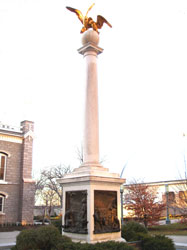
This "Seagull Monument" depicts a folklore miracle in 1848 and was sculpted by Mahonri M. Young. The statue was placed on Temple Square in 1913. Image courtesy of Derek J. Tangren; https://ensignpeakfoundation.org/seagull-monument/
The Miracle of the Seagulls
Agriculture in Utah started with the Latter-day Saint settlement in the late 1840s. The Mormons, having migrated west to escape persecution, began their first year of sowing in 1848, and the growth of their spring crops seemed to be progressing well. In May of that year, a widespread infestation of crickets threatened their critical first harvest, which included hundreds of acres of wheat. Several attempts to burn or flood out the plague of insects proved unsuccessful, and many farmers feared eventual starvation. Frontier agriculture at this stage of settlement was about more than livelihood - it was about lives. But on June 9th, according to Utah folklore, a large swarm of seagulls swept into the valley and ate all of the crickets, saving the harvest.
"The sea gulls have come in large flocks from the lake and sweep the crickets as they go; it seems the hand of the Lord is in our favor."
- Letter to Brigham Young from local leaders
This "miracle of the gulls" is a folk tale that has seen many variations over the years, but almost any telling of it goes far beyond these base facts. I think it's an especially interesting piece of folklore to study because of the unique circumstances of its creation. Folklore inherently stems from the cultural beliefs of a society, and the new settlers of Utah were almost entirely of the Latter-Day Saint faith. As such, it is only natural that a religious overtone is prominent in retellings of the event. The many prayers of the Saints in the fortnight leading up to the miracle usually comprises the main portion of the folk tale, as well as the Saints' comparisons of the infestation to the twelve plagues of Egypt in the Bible. There are those who might chafe at this conflation of historical fact with religious belief. I disagree. Historical Mormon culture is undeniably a key factor to a complete understanding of farming culture in Utah, and this legend is an excellent example of that. Utah agriculture was quite literally founded on hardship.
Hindsight is 20/20
Since the Miracle of the Seagulls is so well-documented by extant historical accounts, we have a unique opportunity to look back on the facts and compare it to the persona this folk tale has taken on over time. Despite dramatic depictions of a swam of seagulls flying into the valley as a gift from God, it is commonly believed that seagulls had resided in the vicinity for many years before Mormons settled the area. Many folk accounts of June 9th mention seagulls regurgitating crickets and eating more in quick succession, presumably because God compelled the creatures to devour as much of the pestilence as possible. However, this is normal behavior for the birds, as the cricket exoskeletons cannot be digested, so the pace at which the gulls ate was likely slower than commonly recounted. Additionally, there are many firsthand written accounts which mention the crickets but omit any mention of seagulls. Still other reports mention severe frost in 1848, and that the final wheat harvest for that year was poor - so if any miracle did occur, it simply stopped an already-bad situation from becoming worse.
So, facts and logic beat superstition once again, right? Not so fast. Any historian will tell you that if all accounts of an event agree on every detail, it's a sign of a careful fabrication, not an infallible truth. Reality is a lot messier, especially when hundreds of versions of the story exist. In any case, most of the discrepancies are in minor details, and at least the general events of the legend as we know it today is supported by evidence. We also have to consider that the Church was effectively the sole history keeper at the time, and was a major influence on the culture of the time. When studying Utah folklore, the important part is that the vast majority of settlers believed it was a miracle. There is documented evidence to support the idea that the seagull miracle was a cultural pillar that shaped the attitude of Utah farmers for many decades. For example, in 1855, a lesser grasshopper infestation occurred, and the Deseret News encouraged farmers not to dismay, but that "through faith and obedience they can prevail in the grasshopper war, at least as well as they did in the cricket war of 1848." We previously discussed the Great Depression on this blog, and how destructive it was to Utah agriculture. But hardship has never been new to these farmers, even through the generations. I'd like to think stories like the cricket war of 1848 positively influenced the longstanding farm culture of Utahans.
Sources
Hartley, William. "Mormons, Crickets, and Gulls: A New Look At An Old Story." Utah Historical Quarterly, vol. 38, no. 3, 1970, pp. 224-39.
“Seagull Monument.” Ensign Peak Foundation, ensignpeakfoundation.org/seagull-monument/. Accessed 28 July 2025.